

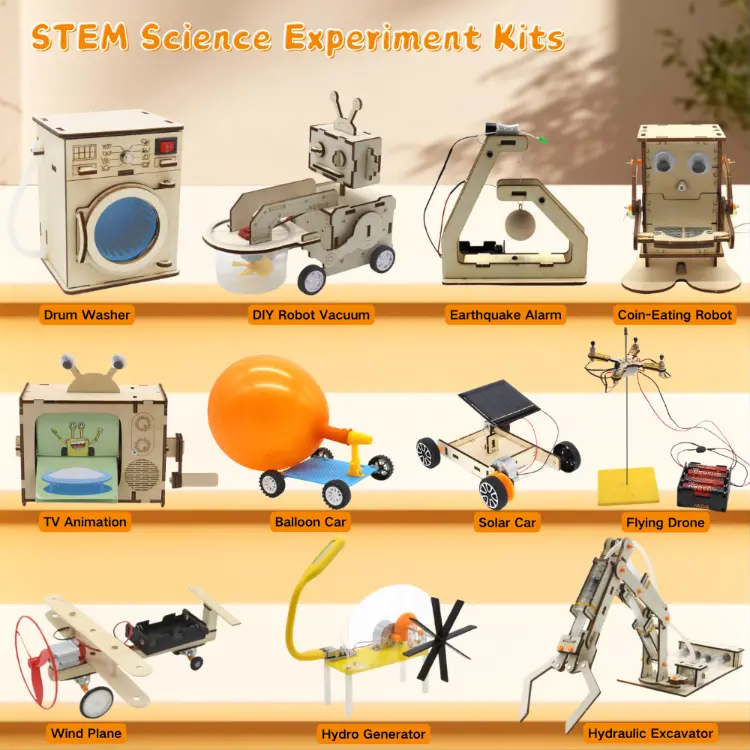
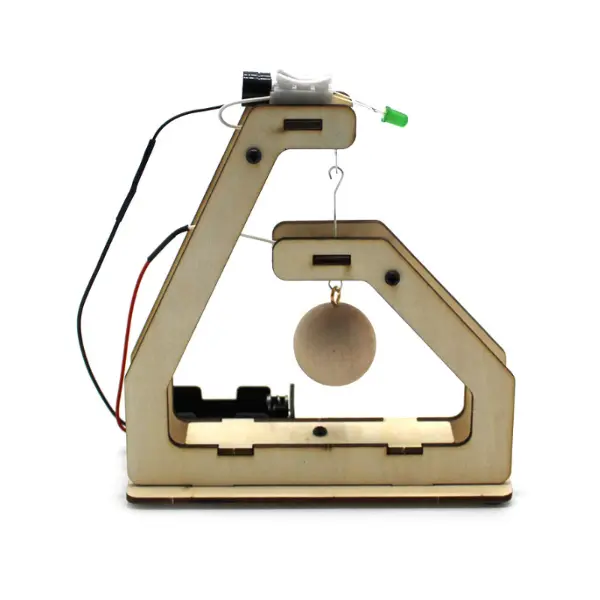
STEM Science Experiment Kits 11 DIY Science Models
Price range: $0.64 through $3.20
Explore STEM science experiment kits with 11 hands-on DIY models, including robots, solar cars, hydraulic machines, flying projects and more.
Combine shipping available. Message us for shipping rates.
- Quality Assurance
- Fast Worldwide Shipping
- Buy with Confidence
Description
STEM Science Experiment Kits for Hands-On Learning
Turn science concepts into something students can build, test, and see in action. This collection of STEM science experiment kits brings together 11 hands-on DIY models covering mechanics, electronics, renewable energy, robotics, motion, hydraulics, and basic engineering.
Instead of learning only from diagrams or textbooks, learners can assemble working models and observe how different scientific principles are used in everyday machines and technology.
Choose from 11 projects, including a DIY washing machine, robot vacuum, earthquake alarm, coin-eating robot, TV animation model, balloon car, solar car, flying drone, wind-powered plane, hydro generator, and hydraulic excavator.
11 DIY STEM Projects to Explore
Each model focuses on a different engineering or science concept, making the collection suitable for classroom activities, home learning, science projects, maker workshops, and hands-on STEM exploration.
1. Balloon Car
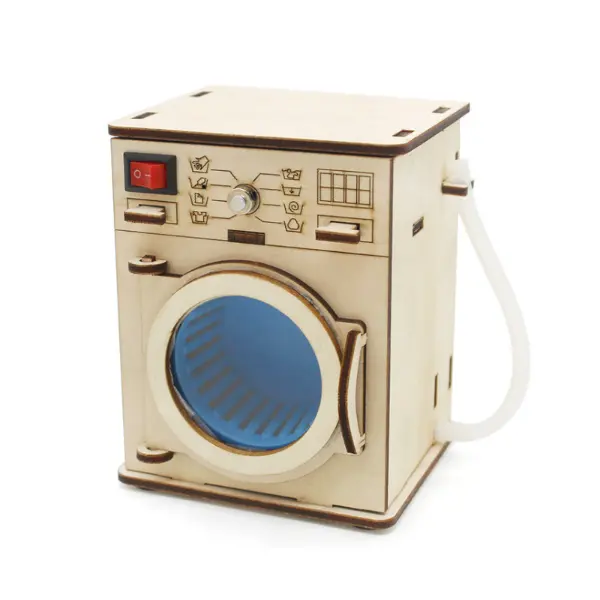
Build a miniature washing machine model and explore rotational motion, motor-driven mechanisms, and basic electrical circuits. The motor converts electrical energy into mechanical rotation, allowing the drum to move like a simplified household appliance.
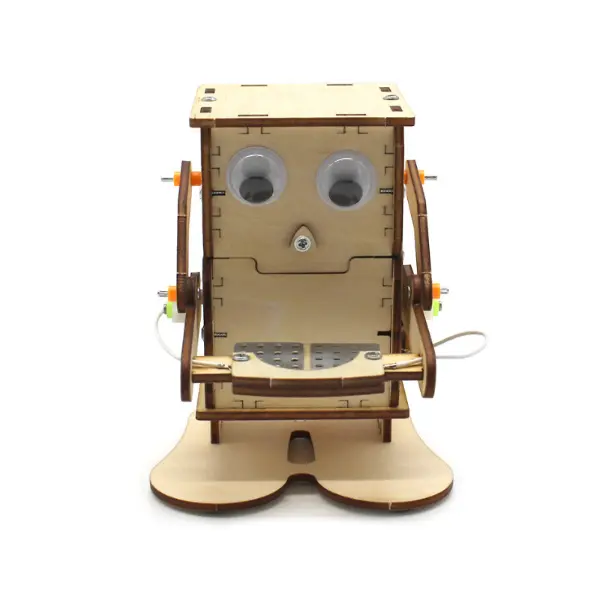
2. Coin-Eating Robot
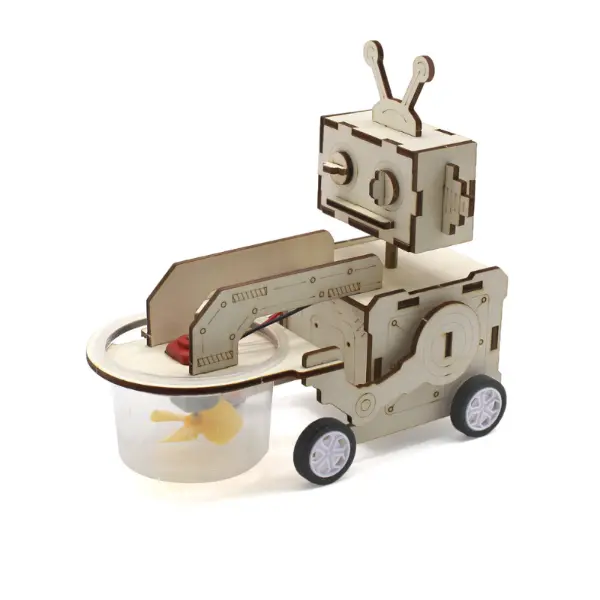
Explore how a robot vacuum combines movement and cleaning mechanisms. The project introduces concepts such as motor-driven wheels, suction, airflow, and basic robotic movement. It is a practical way to connect simple mechanical systems with an everyday smart device.
3. DIY Flying Drone
Learn how vibration and movement can be detected using a simple mechanical and electrical system. The model demonstrates inertia and relative movement: when the structure shakes, the sensing mechanism moves and can trigger an electrical circuit and alarm.
4. DIY Robot Vacuum
Build a fun electromechanical robot that reacts when a coin is placed on its tray. The project demonstrates switches, electrical circuits, motors, and mechanical cam mechanisms while turning a simple input into visible movement.
5. DIY Washing Machine
Explore how mechanical movement can be used to create an animated visual effect. This project combines a model structure with moving components to demonstrate motion conversion and the basic relationship between mechanical movement and visual animation.
6. Earthquake Alarm
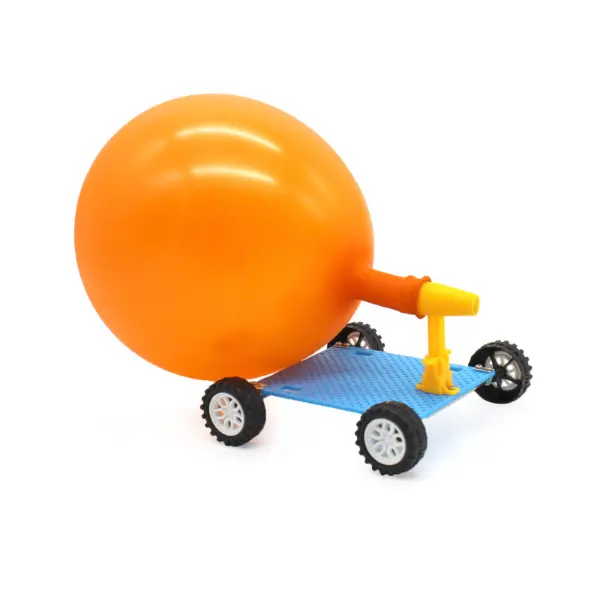
The balloon car demonstrates motion using air released from an inflated balloon. As air moves backward, the car is pushed forward through an action-and-reaction effect. It provides a simple way to explore Newton’s laws of motion, potential energy, kinetic energy, and friction.
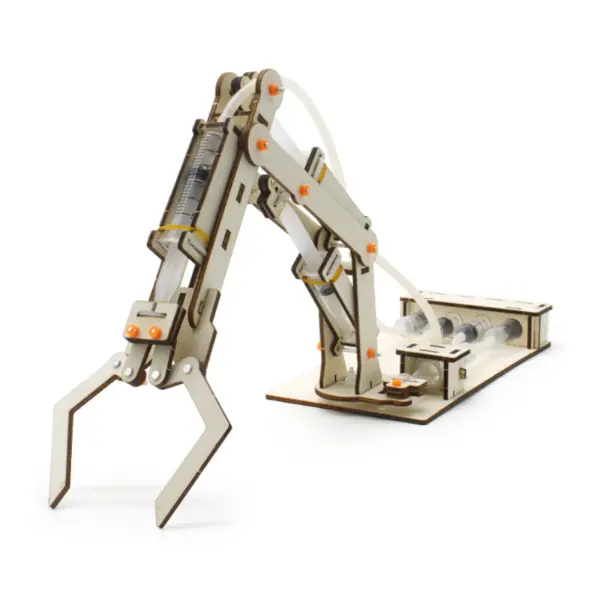
7. Hydraulic Excavator
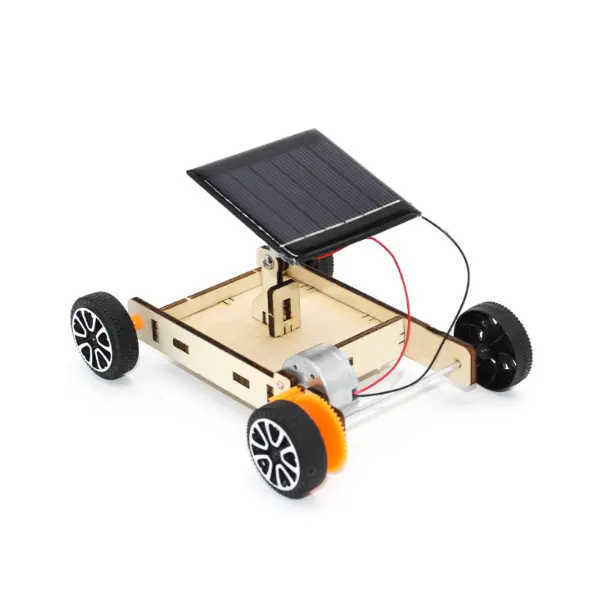
Build a model vehicle powered by a solar cell and explore renewable energy conversion. Light energy is converted into electrical energy by the solar cell, which then powers a motor to produce mechanical motion.
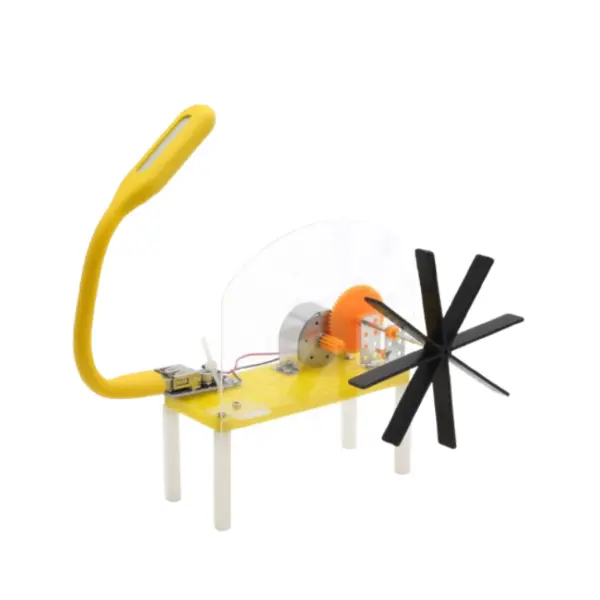
8. Hydro Generator
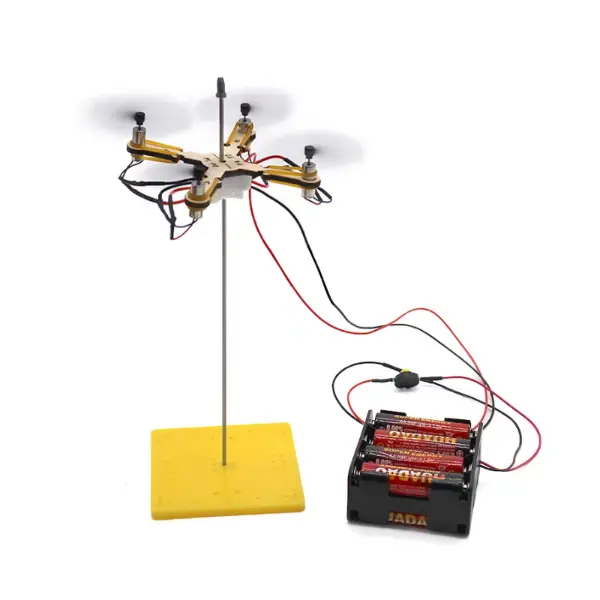
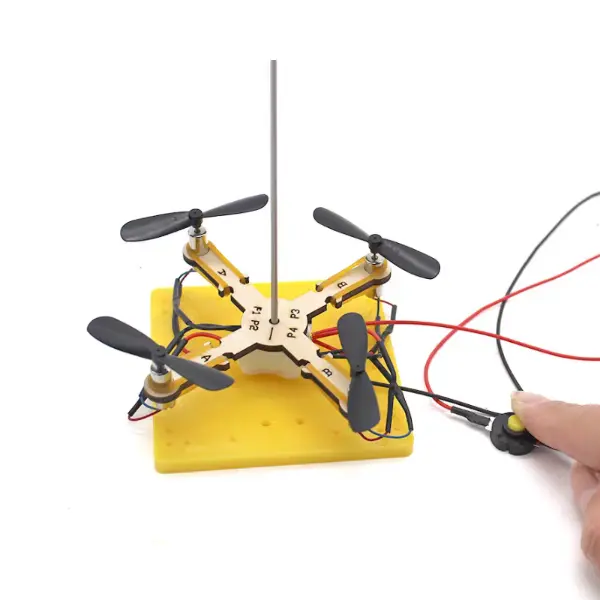
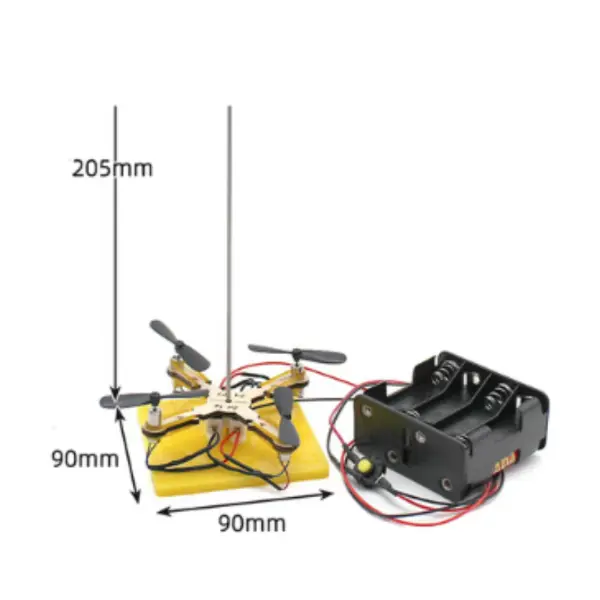
Explore the basic principles behind flying machines through a hands-on drone project. Learners can investigate motor-driven propellers, thrust, lift, balance, and the forces that affect flight. The project connects electrical power with aerodynamics and mechanical movement.
9. Solar Car
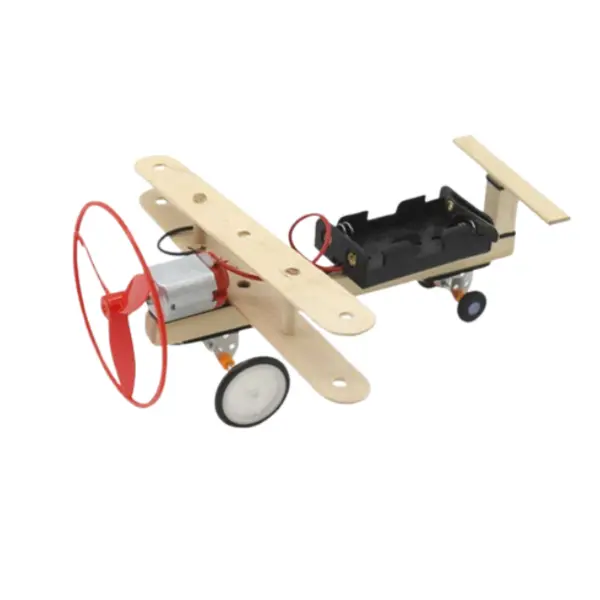
Explore how air movement and aircraft design affect motion. A model plane provides an introduction to concepts such as thrust, lift, drag, weight, balance, and aerodynamics while allowing learners to observe how changes in design can affect performance.
10. TV Animation Model
Turn moving water into useful electrical output with a small hydro generator model. Water movement rotates a turbine, and the turbine transfers mechanical energy to a generator. This project introduces renewable energy, energy conversion, turbine operation, and basic electricity generation.
11. Wind-Powered Plane
Build a miniature excavator and explore how hydraulic systems transfer force through liquid pressure. By operating the hydraulic mechanism, learners can see how pressure can be transmitted through a confined fluid to move the excavator arm and bucket.
Learn Science by Building and Testing
These STEM science experiment kits are designed around a simple idea: build something, observe how it works, and then experiment with it.
Depending on the selected model, learners can explore:
- Electrical circuits and switches
- Motors and mechanical motion
- Gears, cams, and mechanical transmission
- Newton’s laws of motion
- Potential and kinetic energy
- Solar energy and photovoltaic conversion
- Hydropower and energy conversion
- Hydraulic pressure and force transmission
- Aerodynamics and forces of flight
- Robotics and automated movement
- Problem-solving and engineering design
The projects also provide opportunities to compare different designs and test how changes in factors such as weight, friction, airflow, light, water flow, or mechanical structure can affect the result.
A Practical Choice for STEM Projects
These DIY science models can be used for classroom demonstrations, school science projects, maker activities, homeschool learning, or hands-on engineering workshops.
The variety of projects makes it possible to explore different STEM topics without limiting the experience to a single subject. From a balloon-powered car and solar vehicle to a hydraulic excavator and hydro generator, each model connects a scientific idea with a visible mechanical result.
For educators and parents, the projects can also be used as starting points for simple experiments. Learners can ask questions, make changes, observe the results, and develop their own explanations of how the system works.
Choose Your STEM Experiment Project
Select the model that matches the topic you want to explore:
- DIY Washing Machine
- DIY Robot Vacuum
- Earthquake Alarm
- Coin-Eating Robot
- TV Animation Model
- Balloon Car
- Solar Car
- DIY Flying Drone
- Wind-Powered Plane
- Hydro Generator
- Hydraulic Excavator
Build it, test it, and discover the science behind the movement.
FAQ
Q1: What projects are included in these STEM science experiment kits?
This collection includes 11 DIY science and engineering projects: DIY Washing Machine, DIY Robot Vacuum, Earthquake Alarm, Coin-Eating Robot, TV Animation Model, Balloon Car, Solar Car, DIY Flying Drone, Wind-Powered Plane, Hydro Generator, and Hydraulic Excavator.
Q2: Are these STEM experiment kits suitable for beginners?
The projects are designed as hands-on learning models that help learners explore basic science, engineering, mechanics, electronics, energy, and motion through practical experiments. The difficulty may vary depending on the selected project.
Q3: What can students learn from these DIY science kits?
Depending on the selected model, students can explore topics such as Newton’s laws, mechanical motion, electrical circuits, solar energy, aerodynamics, hydraulic pressure, hydropower, motors, and energy conversion.
Q4: Do all 11 STEM projects come in one kit?
The 11 projects are offered as different project options on the same product page. Please select the specific model you need when placing an order.
Q5: Can these science kits be used for school STEM projects?
Yes. These hands-on models can be used for classroom demonstrations, science projects, STEM activities, maker workshops, homeschool learning, and introductory engineering experiments.
Q6: Do the projects require batteries or an external power source?
Power requirements vary by project. Some models use batteries, while projects such as the Solar Car and Hydro Generator demonstrate energy generation or conversion. Please check the specifications of the selected model before ordering.
Q7: What scientific principles can be demonstrated with these STEM kits?
The projects demonstrate a range of principles, including mechanical motion, action and reaction, energy conversion, photovoltaic energy, hydraulic pressure, water power, aerodynamics, vibration, and basic electrical circuits.
Q8: Can these STEM models be used for hands-on engineering activities?
Yes. The models are suitable for hands-on activities where learners can build, observe, test, and modify a working system while exploring how different mechanical and scientific principles affect its operation.
⭐⭐⭐⭐⭐
You May Also Need
If you are also exploring electronics and microcontroller projects, our UNO R3 Compatible Starter Kit is another practical option for hands-on learning.
Learn More
To explore the basic forces involved in flight, see NASA’s educational explanation of the four forces of flight.
Additional information
| STEM Science Experiment Kits | Balloon Car, Coin-Eating Robot, DIY Flying Drone, DIY Robot Vacuum, DIY Washing Machine, Earthquake Alarm, Hydraulic Excavator, Hydro Generator, Solar Car, TV Animation Model, Wind-Powered Plane |
|---|
Only logged in customers who have purchased this product may leave a review.
Related products
-

-

-

-
Sale!
Neuron Inventor Kit for STEM Learning 8-Module
Original price was: $189.99.$127.99Current price is: $127.99.
Reviews
There are no reviews yet.