

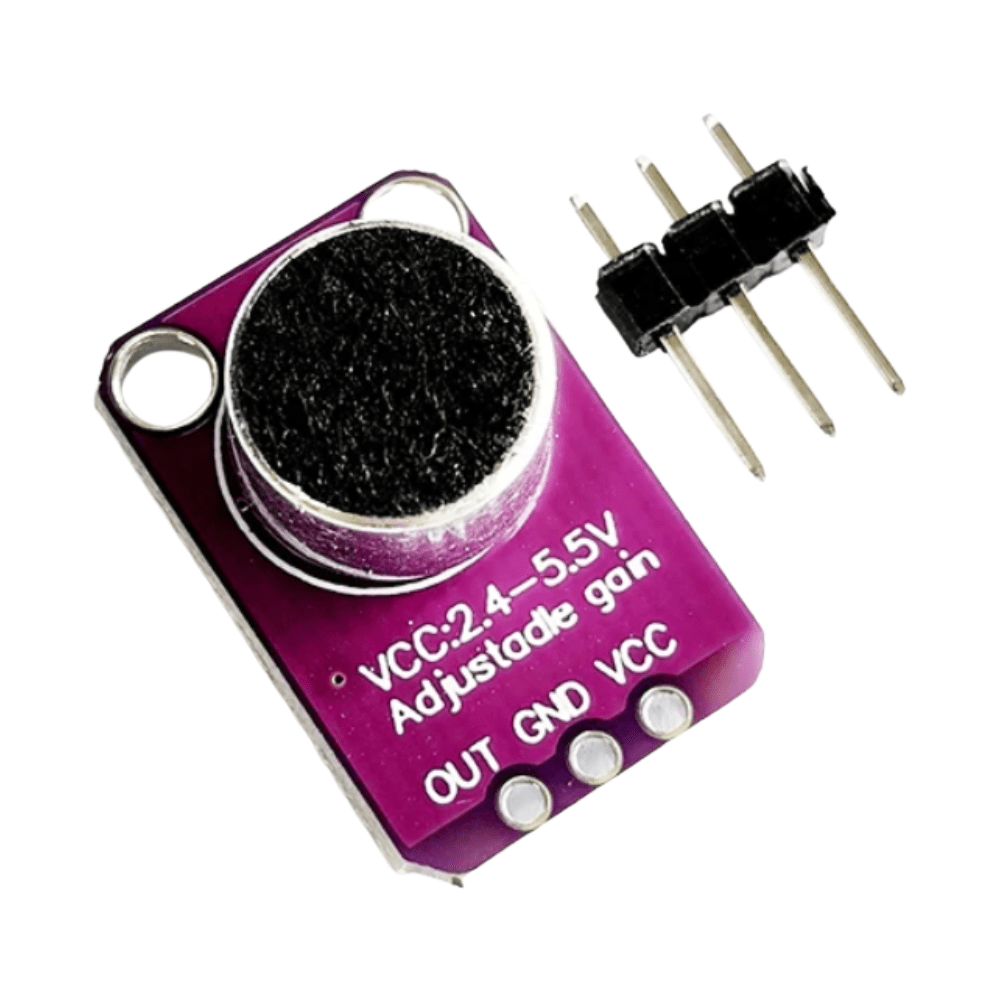
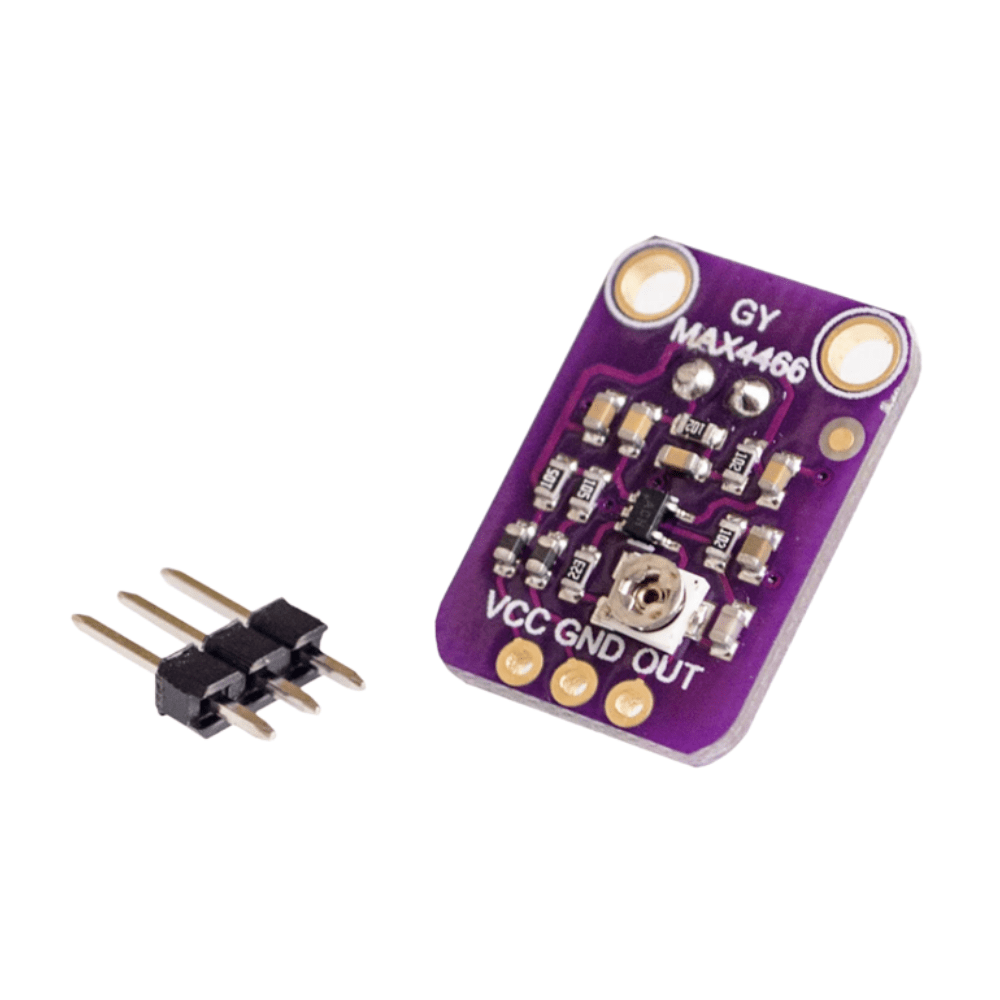
Efficient MAX4466 Microphone Module Adjustable Gain for Arduino
$0.86
The MAX4466 Microphone Module delivers clean analog audio with adjustable gain (25x–125x). Compatible with Arduino, ESP32, Raspberry Pi, and STM32 for voice detection, FFT analysis, and sound-reactive projects
Combine shipping available. Message us for shipping rates.
- Quality Assurance
- Fast Worldwide Shipping
- Buy with Confidence
Description
MAX4466 Microphone Module with Adjustable Gain
The MAX4466 Microphone Module (GY-MAX4466) is a high-performance electret microphone amplifier designed for applications requiring clean analog audio acquisition. Built around the genuine MAX4466 low-noise operational amplifier, this module provides adjustable gain from 25x to 125x, making it ideal for voice recognition, sound detection, audio sampling, FFT analysis, and embedded audio projects.
Supporting a wide operating voltage from 2.4V to 5.5V, the module integrates seamlessly with Arduino, ESP32, Raspberry Pi, STM32, and other popular development platforms. Thanks to its excellent power-supply rejection and low quiescent current, the GY-MAX4466 delivers stable and reliable audio performance in both portable and fixed installations. Specifications and operating characteristics align with commonly documented MAX4466 breakout modules.
Why Choose this Microphone Module?
Unlike traditional sound detection modules that only provide digital trigger outputs, the MAX4466 offers a true analog audio signal, making it suitable for advanced signal processing applications.
Key Features
- Genuine MAX4466 low-noise microphone amplifier
- Adjustable gain from 25x to 125x
- Analog audio output
- Supply voltage: 2.4V–5.5V
- Excellent Power Supply Rejection Ratio (PSRR)
- Low power consumption (<24μA quiescent current)
- Compact GY-MAX4466 breakout board
- Compatible with 3.3V and 5V systems
- Pre-soldered electret condenser microphone
- Easy three-pin connection (VCC, GND, OUT)
Technical Specifications
| Parameter | Value |
|---|---|
| Product Model | GY-MAX4466 |
| Amplifier IC | MAX4466 |
| Output Type | Analog |
| Microphone Type | Electret Condenser |
| Gain | Adjustable (25x–125x) |
| Operating Voltage | 2.4V–5.5V |
| Current Consumption | <24μA |
| Frequency Response | 20Hz–20kHz |
| Output Bias | VCC/2 |
| Interface | VCC / GND / OUT |
| Board Size | Approx. 20.8 × 13.8 × 7.5 mm |
Applications of the Arduino Microphone Sensor
The Arduino Microphone Sensor is suitable for numerous embedded audio projects, including:
- Voice recognition systems
- Audio recording
- Sound level monitoring
- FFT spectrum analyzers
- Clap detection
- Voice activation
- Smart home automation
- Audio-reactive LED projects
- ESP32 sound visualization
- Raspberry Pi audio acquisition
- Environmental sound monitoring
- Robotics
- Interactive installations
Easy Integration with Arduino, ESP32 & Raspberry Pi
for Arduino
Connect the module directly to the Arduino analog input.
Connection
- VCC → 5V
- GND → GND
- OUT → A0
Ideal for:
- Analog sound measurement
- Voice-triggered projects
- FFT visualization
- Clap switches
Analog Microphone Sensor for ESP32
The module works perfectly with ESP32 ADC inputs.
Recommended wiring:
- VCC → 3.3V
- GND → GND
- OUT → GPIO34 (ADC)
Suitable for:
- Audio visualization
- Spectrum analyzers
- IoT sound monitoring
- Edge AI audio preprocessing
Module for Raspberry Pi
Since Raspberry Pi lacks an onboard analog input, pair the module with an external ADC such as MCP3008 or ADS1115 for analog signal acquisition.
Adjustable Gain for Maximum Flexibility
One of the biggest advantages of the Adjustable Gain Microphone Module is its onboard precision trimmer.
Gain can be adjusted from:
- 25× for loud environments
- 50× for normal speech
- 75× for indoor applications
- 125× for quiet sound collection
This flexibility allows the module to perform well in various acoustic environments without changing hardware.
Advantages of the Adjustable Gain Microphone Module
Compared with ordinary microphone modules, this module offers:
- Lower background noise
- Higher signal quality
- Better power-supply noise rejection
- Wider operating voltage
- Adjustable sensitivity
- Stable analog output
- Excellent compatibility with microcontrollers
Package Includes
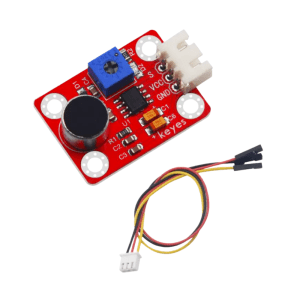
- 1 × GY-MAX4466 MAX4466 Microphone Module
- 1 × 3-Pin Header
Learn More
Product Tutorial
Learn how to connect and program the MAX4466 with Arduino:
https://electropeak.com/learn/interfacing-max4466-microphone-module-with-arduino/
Product Demonstration Video
Watch the identical Microphone Module being tested with Arduino and an oscilloscope:
https://www.youtube.com/watch?v=z7MxxVktykA
You may also like Powerful Arduino Development Board CH340 USB for DIY – Fondyes
FAQ
Q1: Is this Microphone Module compatible with Arduino UNO?
Yes. The module is fully compatible with Arduino UNO, Nano, Mega, Leonardo, and other Arduino boards. Simply connect the OUT pin to an analog input (such as A0), VCC to 5V (or 3.3V where appropriate), and GND to ground.
Q2: Can I use it with ESP32?
Absolutely. It works well with ESP32 when powered from 3.3V. Connect the analog output to an ADC-capable GPIO (for example, GPIO34) for audio sampling, sound analysis, or FFT-based applications.
Q3: What is the difference between the MAX4466 and a digital sound sensor?
It provides a continuous analog audio signal, making it ideal for waveform analysis, voice recognition, and spectrum processing. In contrast, most digital sound sensors only output a simple HIGH/LOW trigger based on a preset sound threshold.
Only logged in customers who have purchased this product may leave a review.
Related products
-
Useful PAM8403 5V Audio Amplifier Board Module with Volume Control
Price range: $0.16 through $0.45Select options This product has multiple variants. The options may be chosen on the product page -
-
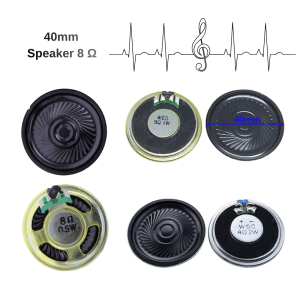
Solid 40mm Speaker 8 Ohm | 0.5W 1W 2W Mini Speaker
Price range: $0.27 through $0.45Select options This product has multiple variants. The options may be chosen on the product page -
Reviews
There are no reviews yet.